Safety Culture and Self-Reporting at Small GA Airports
Voluntary reporting can't capture incidents pilots never know happened.

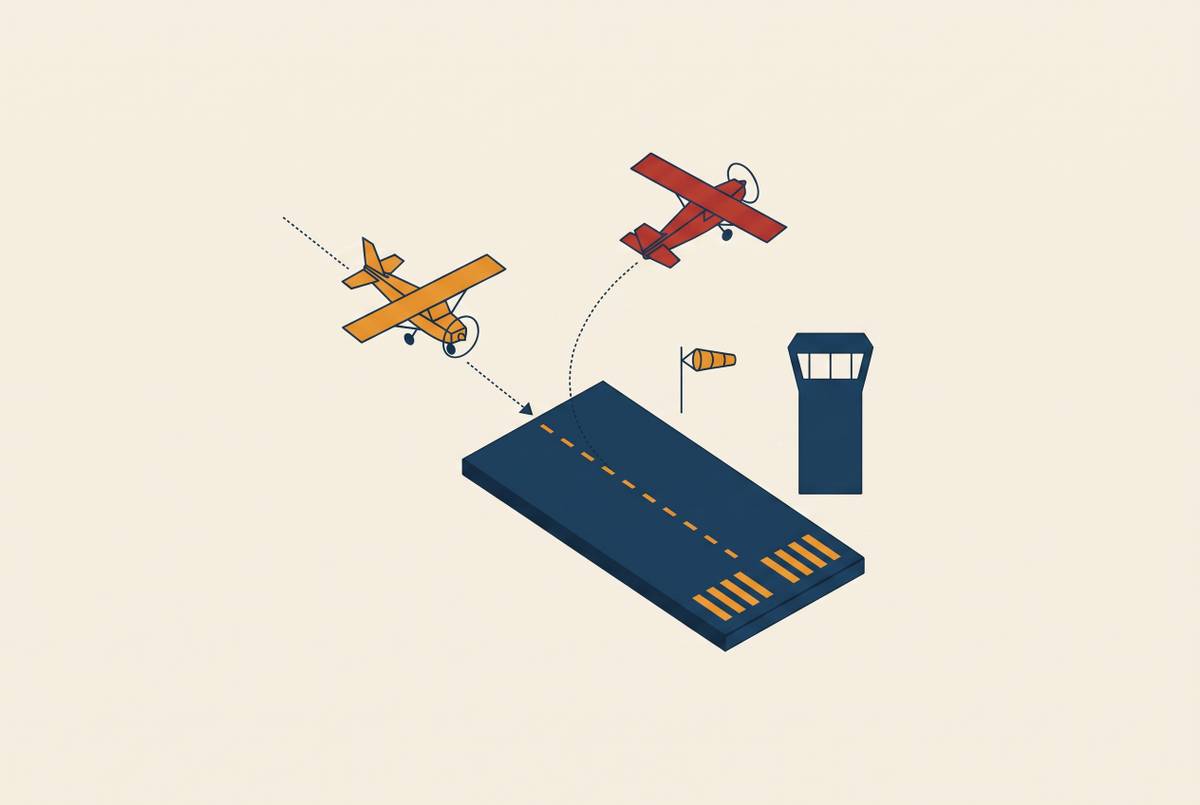
Most small airports in the United States have no control tower, and that absence creates a safety data problem that has nothing to do with how busy the airport is or how skilled the pilots flying into it are. At a towered airport, a controller watches every movement on the field and, by doing so, generates a record: deviations get observed, logged, and entered into the safety system the moment they happen. At a non-towered airport, that loop breaks at both ends. No one catches a runway incursion as it unfolds, and no one writes it down afterward unless a pilot decides, on their own, to file a report. The FAA's own incursion taxonomy shows how structural this gap is: one of its three causal categories, operational incident, requires a controller to be present to even exist as a classification. At a field with no tower, that category disappears entirely, leaving only pilot deviations and vehicle deviations, both occurring with no outside authority positioned to catch them, correct them, or record them. Separation at these airports rests on habits, not rules with teeth: pilots are expected to follow standard traffic patterns, make position calls on a shared common traffic advisory frequency, and look out the window for other airplanes, but none of those three things is mandatory, none is enforced, and none is verified by anyone outside the cockpit. That gap matters most for transient pilots, the ones least familiar with a given airport's local quirks, because non-towered fields draw a disproportionate share of unfamiliar traffic with no controller there to compensate for it.
How the Severity of the Risk Is Shifting Even as Aggregate Numbers Look Stable
Total runway incursion counts can look steady while the incidents that actually kill people get worse, and that is close to what the national data shows. Fiscal year 2024 closed with total U.S. runway incursions nearly identical to fiscal year 2019, a number that on its face reads as a safety system holding its ground. But a flat headline count can hide a shift in severity, and the Department of Transportation's Office of Inspector General found reason to doubt the FAA has a clear handle on that shift. Its March 2025 audit found that the FAA has no integrated way to analyze runway incursion data and identify risk, so the agency tracking this trend may not understand what is driving the gap between a flat total and a rising severe-event rate. That divergence, not the flat number itself, is the finding that should concern anyone evaluating airport safety: whatever is pushing the most dangerous near-collisions upward is evidently not being addressed by whatever is holding the overall count steady. The same audit found that as of October 2024, the FAA had implemented only a fraction of the recommendations made by an independent Safety Review Team, and that several key mitigation initiatives remain unfinished. A national data system with known analytical gaps is a poor instrument for spotting a worsening trend at the thousands of airports that have no tower generating independent records.
What self-reporting programs actually are and why aviation built them
Voluntary safety reporting exists because institutional oversight cannot see everything, and at a non-towered airport, it is close to the only data collection layer that exists. The NASA Aviation Safety Reporting System, known as ASRS, has operated since 1976, collecting reports from pilots, controllers, dispatchers, cabin crew, and maintenance technicians who describe unsafe occurrences, near-misses, and hazardous situations they witnessed or took part in. The program works because of one specific design choice: it is non-punitive. The FAA treats the act of filing a report with NASA as evidence of a constructive attitude toward safety, one likely to prevent future violations, and grants a measure of immunity to pilots who file. That immunity provision is what makes honest reporting possible in the first place; a pilot who made a mistake has far less reason to hide it if disclosure protects rather than punishes. The volume the system generates is substantial: ASRS receives more than 100,000 reports per year, and the FAA and NASA use that data to spot deficiencies, shape policy, and advance human factors safety research. The Flight Safety Foundation's 2024 Safety Report says this kind of proactive risk management, going beyond basic regulatory compliance, is essential to sustained safety performance, and self-reporting is how that posture appears in practice. ASRS itself has flagged "Operations at Non-Towered Airports" as a current top safety issue, and it devoted an entire issue of its CALLBACK newsletter to hazards at exactly these airports, a sign that reports are concentrating around the environment this piece is concerned with.
Why voluntary reporting is structurally overloaded at non-towered airports
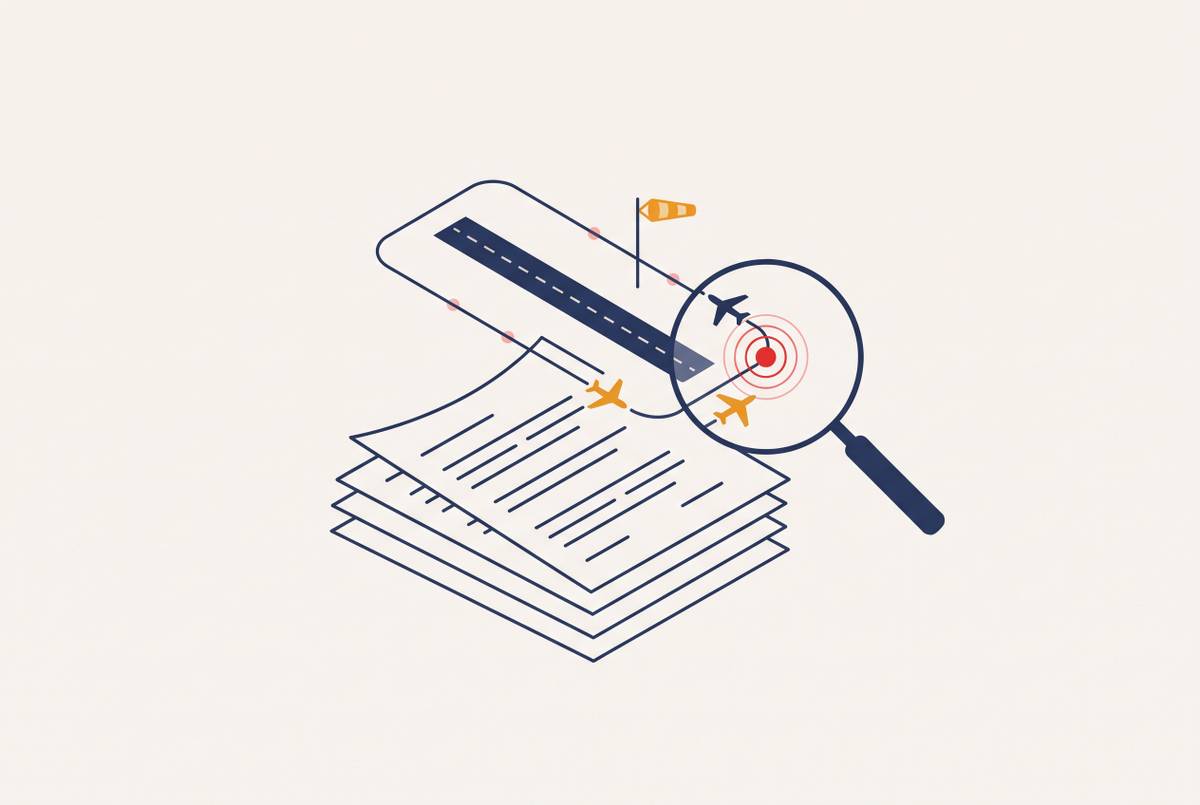
At a towered airport, a filed ASRS report is one data point layered on top of several others that exist regardless of what any single pilot chooses to do: controller observations, ASIAS data, radar tracks, and incident logs all get generated independently. At a non-towered airport, no such backup exists. If the pilot involved in a close call doesn't file a report, that event leaves no trace in the national safety record. Insufficient communication between pilots is the most commonly cited cause of safety incidents near non-controlled airports, and most of those incidents go unreported for a simple reason: neither pilot involved knows the other one had a close call to begin with. The pilots most likely to run into trouble at these fields, transient pilots unfamiliar with local traffic patterns, are also the ones least plugged into any local safety culture and the least likely to know that a reporting channel exists or how to use it. ASRS flagging non-towered operations as a top safety issue is itself a clue to how large this gap really is: the agency is identifying a pattern from whatever fraction of actual incidents happened to get reported, not from a complete record. A reasonable objection holds that pilots are trained professionals who already know how to report safety events, so the system should work as intended. Training and legal immunity help, but reporting depends on a pilot knowing an incident occurred. A pilot who was never told another aircraft was holding short of the same runway has no incident to report, because as far as that pilot knows, nothing happened.
The Economics of Small Airports and the Reporting Gap
The same budget constraints that keep most small airports from ever building a control tower also limit how much they can spend compensating for not having one. Most general aviation airports operate under chronic funding pressure: federal Airport Improvement Program money for non-primary airports flows through Non-Primary Entitlement grants, capped each year, which can be banked for up to four years, while the larger discretionary grants that might fund bigger projects are competitive and limited in supply. Capital replacement costs at small airports have outpaced the rent escalation clauses written into most land lease and hangar agreements, so the money coming in is falling further behind the money going out. Without a tower, there's no controller to serve as the anchor for a local safety program, no facility to house a dedicated safety officer, and often no budget left over to run structured outreach that teaches visiting pilots how the local reporting culture works. The airports that depend most heavily on voluntary self-reporting to catch hazards are, almost without exception, the same airports with the least money available to build that reporting culture.
Good Local Safety Culture at a Non-Towered Airport
A handful of practices separate non-towered airports with strong safety cultures from those without one, and they tend to look the same wherever they show up. Based pilots and flight school students get encouraged to file ASRS reports. Safety briefings happen regularly, and they use aggregated ASRS data to show pilots what kinds of incidents get reported at comparable airports elsewhere. Airports without a tower still designate a safety officer or stand up a safety committee to make sure the function is assigned. Flight training operations deserve particular attention here: the Transportation Safety Board's 2025 Watchlist found that runway incursions cluster at a small number of airports, many of them flight training unit airports, and particularly at towered fields, pointing to a risk pattern tied to the training environment itself. The non-punitive structure behind ASRS does the most work in exactly this kind of setting, where pilots share the same patch of airspace day after day. A flight school culture that treats filing as normal rather than exceptional makes a measurable difference, because students and instructors are flying the same traffic pattern repeatedly and have every opportunity to notice and report what goes wrong. Even so, there's a hard ceiling on what culture alone can accomplish. An airport can have an excellent reporting culture and still only capture events that a pilot recognized as worth reporting. An incident that nobody perceived as a near-miss, because nobody on either end of it realized how close it came, leaves no record no matter how strong the surrounding culture is. The Flight Safety Foundation treats compliance as a necessary first step, not a sufficient one, and argues that a real safety program has to go further and build in proactive risk management, which takes data that a voluntary system cannot promise to deliver on its own.
How Digital ATC Technology Closes the Observation Gap
Non-towered airports have no observer on site, and that is the exact problem digital air traffic control technology is built to solve. A digital remote tower swaps the traditional out-the-window view for a sensor suite: typically a set of high-definition cameras giving 360-degree coverage, infrared sensors for low-visibility conditions, surface radar or multilateration to track movement on the ground, and ADS-B receivers to pick up airborne traffic, all feeding into a continuous, recorded picture of everything happening on the airfield. That record exists whether or not a pilot ever files a report. A conflict that neither pilot in the air noticed still appears in the sensor data, because the system does not rely on anyone in the cockpit to notice it first. AI-based tools layered on top of that sensor data can handle object recognition and tracking, flag potentially hazardous situations automatically, and transcribe radio communications, so they can catch abnormal situations and developing conflicts that neither pilot involved may have recognized at the time. Remote tower technology also changes the staffing math: a single facility and a single certified controller can monitor several small airports, one at a time, which makes the economics workable for airports that could never justify the cost of a dedicated physical tower and full-time staff. Leesburg Executive Airport in Virginia ran the first municipal remote tower in the United States, moving from testing in 2015 to full operational service from 2018 to 2023, a six-year run that demonstrated the concept works in practice. The FAA is now evaluating a remote tower system at its William J. Hughes Technical Center in Atlantic City. General Aviation builds affordable digital ATC towers for exactly this population of airports: the majority of U.S. fields that have no tower at all and can't justify the cost or staffing a traditional manned facility would need. None of this displaces the case for reporting culture. It restores the independent observation layer that non-towered airports have never had, and it works alongside voluntary reporting.
What Airport Operators and Pilots Can Do Now
Federal policy and nationwide technology deployment both lag behind the risk described above, but pilots and airport operators still have options today. Pilots should treat ASRS filing as the default response to anything that felt even slightly off, not just to events that were obviously dangerous. The non-punitive design exists specifically to lower that threshold, and a report filed over a near-miss that felt minor at the time is still a data point the system needs. Flight schools based at non-towered airports should treat ASRS filing as something students are trained to do, not an optional form they fill out if they remember, because pilots who learn to report early tend to carry that habit through their entire flying careers. Airport operators can designate a safety contact or stand up a safety committee without waiting for a tower to justify it, and they can gather and share local ASRS data with based pilots on a regular schedule. You can use the FAA's Runway Incursion Mitigation program where you're eligible, but it was designed for towered airports dealing with nonstandard taxiway layouts and has real limits at uncontrolled fields; Miami Executive Airport shows the program working as intended, and tower support is what makes that success possible there. On the policy side, the DOT Inspector General's March 2025 finding that the FAA lacks an integrated way to analyze runway incursion data points to a specific, fixable gap: operators and aviation advocates have reason to push for data-sharing improvements that make non-towered airport incidents visible at the national level, not just buried in individual airport files. The FAA Reauthorization Act of 2024 gives this effort a deadline. Section 206 directs the FAA to operationalize all key NextGen programs by December 31, 2025, and Section 207 separately establishes a new Airspace Modernization Office starting January 1, 2026. So non-towered airport operators have a narrow window to weigh in on digital tower standards and deployment pathways before the next policy cycle locks in. Safety culture and digital tower technology don't compete to solve the same problem. Building a strong reporting culture now creates the evidence base that will make the case for the next investment, the one that finally gives non-towered airports the independent observation they have gone without for decades.